

Trump Claims Prices Are “Down, Down, Down.” Americans In All 50 States Know Otherwise.
WSJ - See The States Where High Gas Prices Are Hurting The Most
AP - Retail Price Impacts From The Iran War Are Uneven But Add Up For US Households Before Midterms
CBS News - Trump Promised To Lower Prices For Americans. Here's What The Data Shows
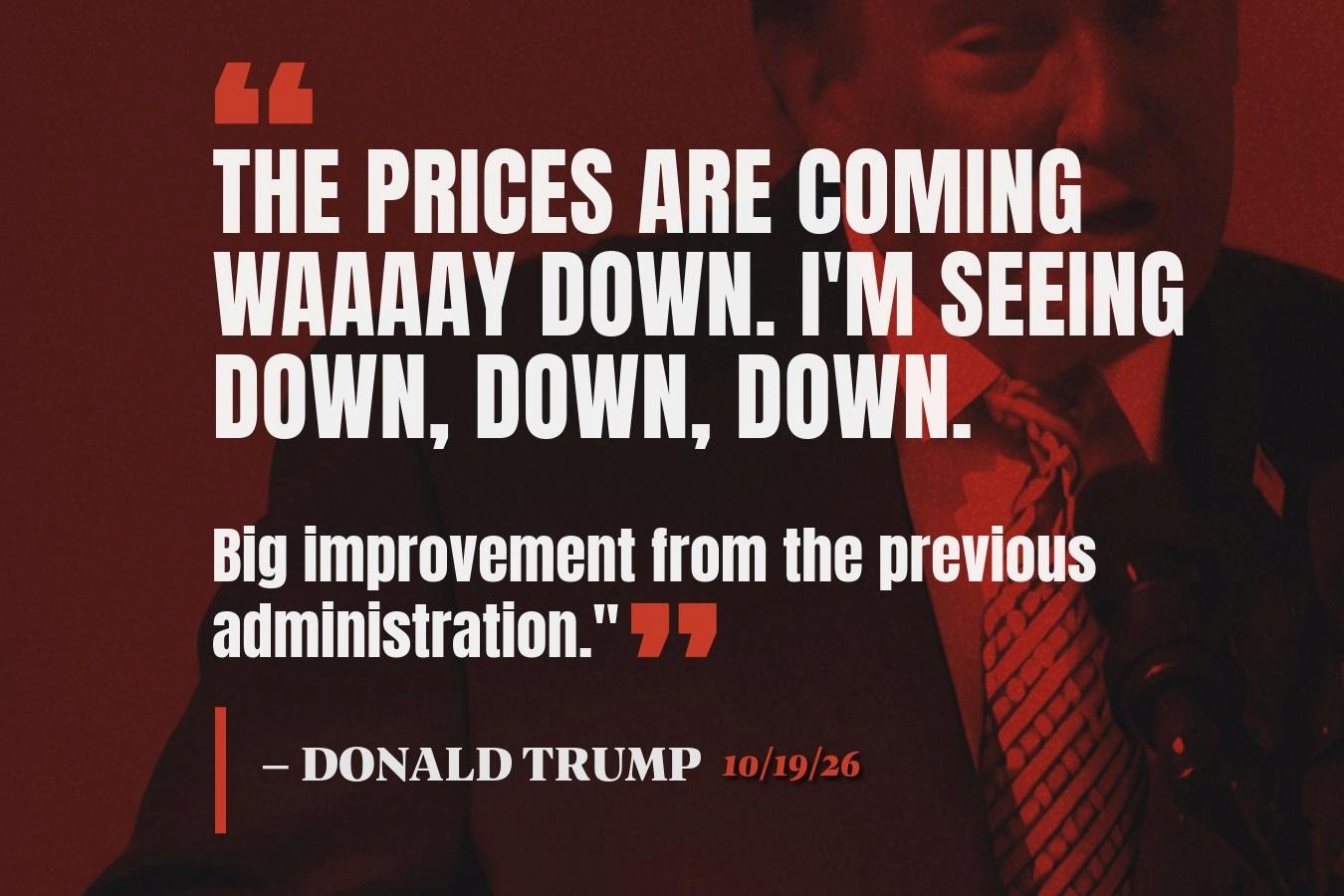
Despite Donald Trump’s sweeping declarations that he’s brought prices down, headlines in all 50 states paint a very different reality. Throughout the country, Americans are stuck paying for Trump’s disastrous policies as they struggle to afford everyday necessities.
“While Americans in all 50 states are feeling the pain of skyrocketing costs every single day— at the gas pump, in the grocery store, and when they pay their energy bills—Trump has the audacity to say prices are going down,” said Leader Schumer. “Families are not fooled—but they are fed up. Enough is enough. Republicans may not care about record-high food and fuel prices, but Democrats do. We’re fighting to make life more affordable for working families because every American deserves a fair shot at building a prosperous and secure life.”
Republicans voted to slash $1 trillion from the health care system and gut food assistance to give billionaires and big corporations a tax cut. Trump’s illegal war with Iran has sent gas and diesel prices soaring, and rather than vote to bring our troops home, Republicans voted to keep raising energy costs.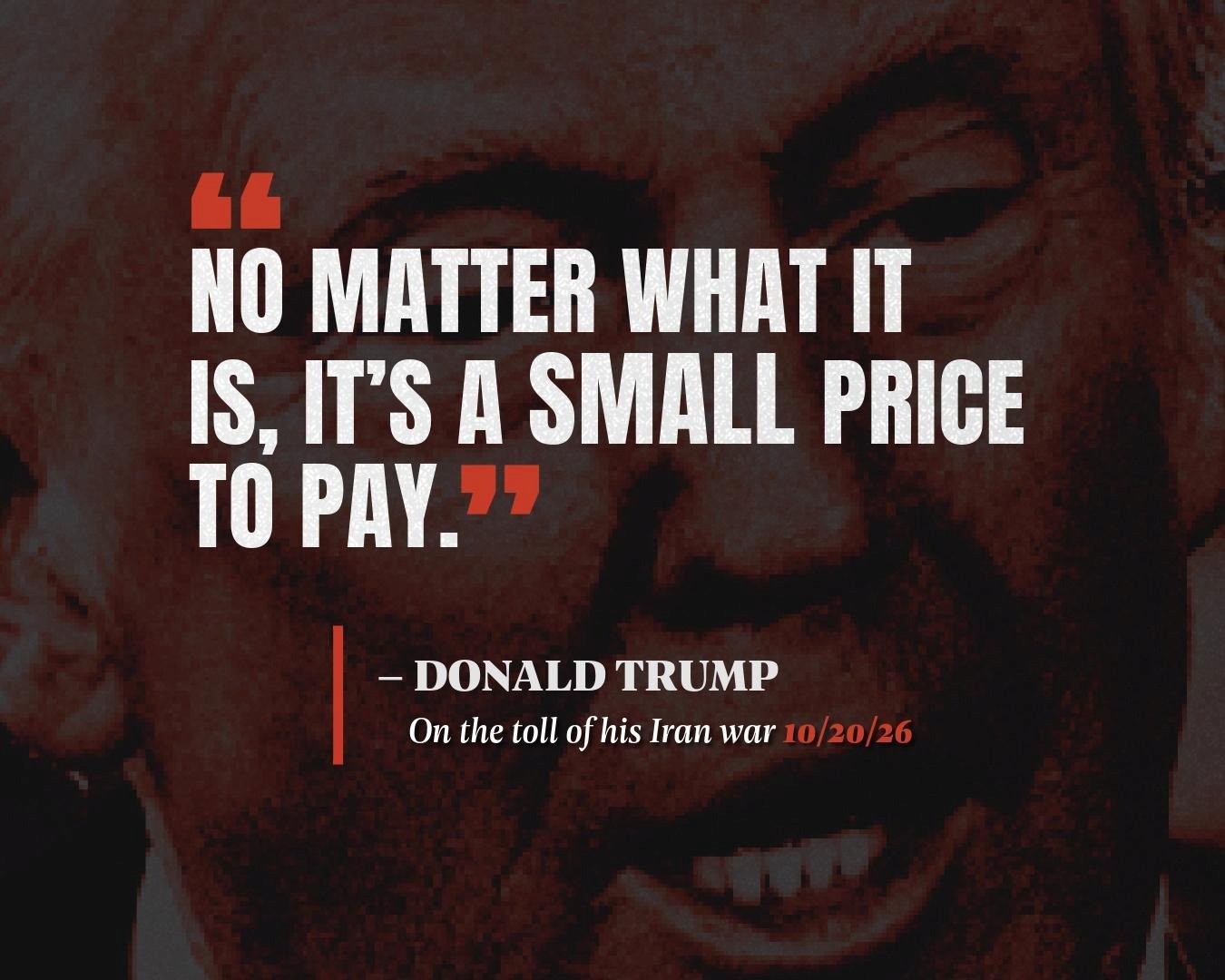
Take a closer look at how Trump’s failed agenda is costing Americans in every state:
Alabama:
- WAFF 48 - Rising inflation squeezes North Alabama family budgets - “Gasoline prices jumped more than 9% in September, adding further pressure to household budgets. Food prices are up 2.5% compared to last year. Inflation-adjusted weekly earnings have also fallen over the past year, meaning paychecks are not stretching as far for many families.” [WAFF, 10/14/26]
Alaska:
- The Alaska Independent - 20,000 fewer Alaska children had health coverage after cuts to Medicaid, research shows - “When Congress passed the budget bill known as the One Big Beautiful Bill Act in July 2025, cutting more than $1 trillion in Medicaid spending over 10 years, Republicans said the goal was to extend tax relief, eliminate waste, and reduce overall federal spending. More than a year later, researchers have found that an estimated 20,000 children in Alaska have lost the health insurance they received through Medicaid and Denali KidCare, the state’s Children’s Health Insurance Program (CHIP) and Medicaid program for children from low-income families.” [The Alaska Independent, 9/22/26]
Arizona:
- Arizona PBS - Nearly half a million Arizonans failed to receive SNAP benefits – “Arizonans who applied for SNAP benefits say it was nearly impossible to get their eligibility verified, leaving them unable to receive their benefits. An investigation into the Arizona Department of Economic Security (DES) shows that out of all calls for eligibility interviews, only 13% of interviews were completed. Nearly 3 million calls during an 18-month period were dropped, and almost half a million Arizonans who previously received food stamps were cut from the program.” [Arizona PBS, 9/24/26]
Arkansas:
- Arkansas Advocate - Diesel prices add pressure on farmers during harvest – “Diesel powers nearly every farm field operation, from planting and spraying to fertilizing and harvesting. Tillage requires the most fuel and is expected to account for the largest share of farm fuel expenses during the 2026 growing season, according to a South Dakota State University publication. The rise in diesel prices coincided with disruptions to global oil supplies following the start of the conflict with Iran on Feb. 28 and the closure of the Strait of Hormuz.” [Arkansas Advocate, 10/18/26]
California:
- Press Democrat - North Bay food banks look to state, counties to soften blow of federal SNAP cuts - “As organizations that help feed California’s hungry brace for unprecedented federal cuts to food assistance, North Bay food banks say they are already seeing growing numbers of people at distribution sites who have lost their benefits or are feeling the burden of high food and gas prices. Tax and spending cuts approved by Congress last year as part of H.R. 1, the “One Big Beautiful Bill Act,” are projected to reduce spending on the Supplemental Nutrition Assistance Program (SNAP) by $186 billion nationwide over the next 10 years.” [The Press Democrat, 9/21/26]
Colorado:
- CPR News - Rising costs and SNAP cuts put a new pressure on food banks and families - “More than one in eight Coloradans lacks the resources to get healthy, nutritious food on the table. Leaders of the state’s food banks blame rising costs and cuts to federal programs for putting a new strain on food banks and other institutions trying to help keep people fed.” [CPR, 10/15/26]
Connecticut:
- NBC CT - Connecticut gas and diesel prices rise as global conflicts pressure fuel markets - “Drivers in Connecticut are paying more for gasoline and diesel as global events put pressure on fuel markets.” [NBC News CT, 9/14/26]
Delaware:
- NBC (Coast TV) - Rising diesel prices put pressure on Delaware commercial fishermen - “Rising diesel prices are putting pressure on commercial fishermen along the Delaware coast, with some local watermen saying the higher costs are changing when and how often they take their boats out. Delaware's average diesel price is now $6.43 a gallon, compared with about $3.65 per gallon at this time last year, according to Triple A.”[NBC News, 10/1/26]
Florida:
- Axios Tampa Bay - Where Trump tariffs hit Florida hardest - “Florida has shouldered nearly $12 billion in tariff costs from President Trump's trade actions since the start of 2025, the eighth-highest state. Why it matters: Tariffs can raise prices at the register as businesses shift added costs to consumers. By the numbers: The state's estimated tariff tab amounts to about $1,279 per household, according to National Taxpayers Union Foundation data.” [Axios Tampa Bay, 9/1/26]
Georgia:
- The Atlanta Journal-Constitution - Georgia’s rural healthcare under strain after thousands drop insurance - “Medical providers from all over rural Georgia are reporting new strain since the beginning of the year — the result of major policy changes in Washington that are testing the strength of the country’s safety net programs. Large funding cuts to food stamps and major changes to Medicaid, the federal healthcare program for the poor, are beginning to be felt downstream as lower-income Georgians have their budgets stretched.” [AJC, 10/5/26]
Hawaii:
- Hawaii News Now - Spotlight Now: From gas to groceries, Hawaii families hit by rising costs - “Hawai?i residents are facing rising costs on everything from gas to groceries. Hawai?i Foodbank CEO and President Amy Miller said more people are seeking food assistance — many for the first time — with demand now exceeding levels seen during the height of the pandemic.” [Hawaii News Now, 10/13/26]
Idaho:
- Idaho Capital Sun - As health insurance costs soar, some Idaho healthcare workers pay for medical care out of pocket - “Joshua and Ashley Durham run a family medicine practice, and for the first time in their lives, they have no health insurance. When the Durhams began their practice at the end of 2023 — he as a primary care physician and she as a pharmacist who handles the billing — the couple bought coverage for themselves and their two kids on the Affordable Care Act marketplace. But they said their monthly premiums for a similar health plan for this year rose several hundred dollars to nearly $1,600.” [Idaho Capital Sun, 9/23/26]
Illinois:
- Chicago Crusader - 400,000 Illinois residents could lose their Medicaid coverage to federal cuts - “In 2025, federal lawmakers passed House Resolution (H.R.) 1, also known as the ‘One Big Beautiful Bill Act.’ Key provisions of the legislation are projected to cut $1 trillion from Medicaid nationally over the next 10 years, including $26 billion in cuts to Medicaid funds for Illinois. An estimated 400,000 Illinoisans could lose coverage due to funding and eligibility changes contained in H.R. 1, according to Robert Wood Johnson Foundation.” [Chicago Crusader, 10/19/26]
Indiana:
- Hoosier AG Today - Trump Tariff Fallout: Indiana Farmers Lost $607M from US-China Trade War - “Indiana’s farmers and agricultural businesses lost an estimated $607 million as a result from the latest U.S.-China trade war, according to new research from North Dakota State University—part of a broader $14.9 billion annual loss in U.S. agricultural exports tied to retaliatory tariffs imposed by Beijing. The findings underscore how a geopolitical dispute has rippled into the Corn Belt, where China has long been a cornerstone buyer of soybeans, corn and other commodities that anchor Indiana’s farm economy.” [Hoosier AG Today, 5/25/26]
Iowa:
- Des Moines Register - Is Iowa still affordable? Not as much, inflation report shows – “Iowa may be an oasis of affordability, but surging inflation is catching up with the Hawkeye State and the rest of the Midwest, according to the latest Bureau of Labor Statistics data…Midwest prices rose more than twice as much in September as they did in August, marking the highest one-month jump since the COVID-19 pandemic as fuel costs surge nationwide.” [Des Moines Register, 10/21/26]
Kansas:
- KCTV - Kansas City barbecue owners absorb rising beef costs, warn price hikes possible – “Beef prices have climbed sharply in recent months, and two Kansas City-area barbecue restaurants say they are absorbing the cost rather than raising menu prices, at least for now.” [KCTV, 9/23/26]
Kentucky:
- Messenger Inquirer - How Import Tariffs Could Impact Kentucky Grocery Bills - “From morning coffee and orange juice to fresh fruit, seafood, beef, and chocolate, many staples in American kitchens depend heavily on imports. That makes food prices particularly sensitive to changes in U.S. trade policy. Tariffs are taxes collected from U.S. companies when they import goods from abroad, increasing the cost of bringing affected products into the country…For American households, that means tariffs on food and beverages can show up where they are especially difficult to avoid: the grocery bill.” [Messenger Inquirer, 10/19/26]
Louisiana:
- The Acadiana Advocate - With skyrocketing fuel costs, Louisiana farmers are in trouble. How much more can they afford? - “Eddie Lewis III’s sugar cane crop looks better than it has in years, but he’ll be lucky if he breaks even by the end of the harvest. Diesel prices have nearly doubled since he created his budget last winter. Fertilizer costs are up 20%. And a new, invasive pest known as the pasture mealybug has led to an unexpected $25,000 pesticide bill. Lewis estimates that he’s already $200,000 over his $1 million budget. He has cut labor, held off on equipment purchases and is rethinking how many fields to replant across his 1,000 acres in Lafayette, Iberia and Vermilion parishes. But there’s only so much he can cut before cost-saving measures affect the success of his crop.” [The Acadiana Advocate, 10/19/26]
Maine:
- Maine Morning Star - Everyday increases cost Maine households $4,300 since Trump returned to office - “You’re not imagining it: everyday costs are going up. From gas to groceries, heating oil to healthcare, Mainers are paying substantially more for goods and services than they were a year ago. The average Maine household has paid an average of $4,300 more for goods and services since President Donald Trump began his second term, according to an analysis released last week, which attributes much of that increase to the war in Iran, tariffs and rising healthcare costs.” [Maine Morning Star, 9/16/26]
Maryland:
- WBAL-TV - Maryland SNAP changes hit Oct. 1 as 35,000 lose benefits and costs jump - “Some SNAP recipients will see a slight increase in their payments as the federal government adjusts benefits to account for inflation, a change implemented every October. However, Maryland is now responsible for covering millions more in administrative costs, while food distribution organizations like 4MyCiTy are already feeling the effects of reduced SNAP eligibility.” [WBAL-TV, 10/1/26]
Massachusetts:
- WWLP - Rising fuel costs to hit Massachusetts homes this winter – “Heating oil prices in Massachusetts have increased by 75% compared to last year, reaching an average of $6.15 per gallon as temperatures drop across the region. According to data from the Massachusetts Department of Energy Resources, the price surge is driven by inflation, increased energy demand and concerns surrounding conflict in the Middle East. Meanwhile, propane costs have risen 4%, bringing the average price to $3.62 per gallon.” [WWLP, 9/23/26]
Michigan:
- Michigan Public - Rising costs and tariffs stall Michigan small business growth, group says - “Economic growth for small businesses in Michigan has stagnated, Brian Calley, president and CEO of the Small Business Association of Michigan, said Tuesday. Calley said with regulations, tariffs, and high energy costs, business owners are in a tough spot.” [Michigan Public Radio, 10/13/26]
Minnesota:
- Axios Twin Cities - Rising diesel prices strain Minnesota school bus budgets - “Rising fuel prices are squeezing already cash-strapped Minnesota school districts. Some districts are consolidating or reducing routes to cut costs, disrupting student and family routines.” [Axios Twin Cities, 10/9/26]
Mississippi:
- WAPT - Diesel prices soar, leaving Mississippi truckers struggling - “Truck drivers in Jackson are facing record-high diesel prices, with some spending more than $1,000 to fill up their big rigs at the Pilot gas station. Diesel prices have soared to record highs, with the national average ranging from $6.32 to $6.39 per gallon, leaving truckers grappling with rising costs and shrinking earnings.” [WAPT, 10/5/26]
Missouri:
- KFVS - Rising fuel costs strain southeast Missouri fire department budgets - “As the cost of fuel continues to rise, several Heartland fire departments say it’s putting a strain on their already small budgets.” [KFVS, 9/24/26]
Montana:
- Montana Public Radio - Montanans shopping for health insurance face rising costs, shrinking subsidies, fewer choices - “During the COVID pandemic, Congress enhanced tax credits that lowered the monthly premium for Health Insurance Marketplace plans. There had always been financial help for low-income Americans, but people with higher incomes were also able to get a lower monthly payment. Last year, Congress didn’t renew that enhanced subsidy.” [Montana Public Radio, 10/12/26]
Nebraska:
- KETV - Nebraska farmers face high fuel costs, uncertain markets during harvest - “As farmers across Nebraska bring in their corn and soybean crops, rising fuel costs, pressure on commodity prices and uncertainty in international markets are making this year's harvest season difficult. For Matthew Erickson, a farmer in the Sterling area, diesel prices have become a significant concern as he and his family spend long hours operating heavy machinery in the fields.” [KETV, 10/19/26]
Nevada:
- Reno Gazette Journal - Nevada to see 17% hike in ACA insurance premiums as preview period starts - “Consumers will see another significant increase in health insurance costs as the window-shopping period for Nevada Health Link kicked off Monday. Nevadans looking at Affordable Care Act health plans for the 2027 plan year can expect to see an average rate increase of 17% from the nine insurance carriers on the state exchange, according to the Nevada Division of Insurance.” [Reno Gazette Journal, 10/5/26]
New Hampshire:
- New Hampshire Union Leader - New Hampshire faces $11 million SNAP hit as federal cost shift begins - “New Hampshire faces an $11 million hit due to Trump administration changes to the food stamps program, which pushed more administrative costs of the program on to states.” [New Hampshire Union Leader, 10/1/26]
New Jersey:
- New Jersey Monitor - Thousands of NJ residents face food stamp cuts under new federal rules - “Many New Jerseyans on food stamps could see their monthly payments reduced, and 47,000 could lose benefits entirely, under Trump administration actions that also shift hundreds of millions of dollars in program cost to state taxpayers, according to New Jersey officials.” [New Jersey Monitor, 5/11/26]
New Mexico:
- Albuquerque Journal - Journal Poll: New Mexicans say inflation, cost-of-living top concerns facing families - “Rising inflation, accessing healthcare and making ends meet were the biggest concerns facing New Mexico families, according to a recent Journal poll. The poll, which asked ‘what is the biggest concern facing your family right now,’ found about 47% of likely voters said inflation and cost of living was the biggest concern facing their family, 17% said healthcare access and insurance while another 16% said financial insecurity.” [Albuquerque Journal, 10/20/26]
New York:
- SiLive: Nearly 500K New Yorkers lose health plan after federal cuts - “Hundreds of thousands of New Yorkers lost their health care plan earlier this month thanks to federal funding cuts and changes to income eligibility. Marissa Crary, a spokesperson for the state Health Department, said about 450,000 residents of the Empire State lost their Essential Plan coverage due to tax credit eligibility changes passed by the Republican-controlled Congress and President Donald Trump in last year’s budget reconciliation bill, formerly known as the One Big Beautiful Bill Act.” [SI Live, 7/27/26]
North Carolina:
- WLOS - Federal SNAP funding shift leaves NC counties with millions in added costs – “North Carolina counties are taking on a larger share of the cost of administering SNAP beginning Oct. 1, a change expected to cost local governments millions of dollars more this fiscal year.” [WLOS, 10/1/26]
North Dakota:
- Valley News Live - Rising diesel costs impact trucking industry in North Dakota - “The recent increase in gas prices has put a strain on everyday drivers. Truckers may be feeling the impacts the most. Most diesel prices around the state are more than $6 a gallon, two dollars more than regular unleaded, according to AAA. With the rapid hike, fleets are struggling to match their prices with inflation.” [Valley News Live, 9/21/26]
Ohio:
- 10TV - Mid-Ohio Food Collective sees increased need as cost of living rises- “This week, the federal government cut back on its share of the SNAP program, which puts more costs on states. Impacts could trickle down to local food pantries.” [WBNS, 10/3/26]
Oklahoma:
- ABC - Soaring diesel prices taking a toll on Oklahoma rancher - “In Broken Arrow, Oklahoma, third-generation rancher Scott Belden is in the middle of harvest. And anxious. ‘It's probably the most stressful time in my life,’ Belden, 55, said. It's not just the demanding time of year that has the lifelong rancher uneasy—the record-breaking cost of diesel is also putting additional pressure on him and his business.” [ABC News, 10/15/26]
Oregon:
- Oregon Public Broadcast - SNAP cuts, soaring food costs and rising hunger grip Oregon families- “The hunger crisis gripping Oregon is on full display at food banks like this one, which serve as a respite from the grocery costs that have soared more than 30% since 2019. Here, in the Willamette Valley countryside, the line stretches out the door and around the corner at the end of the month, when federal food stamp benefits dry up and families struggle to fill their pantries.” [Oregon Public Broadcast, 8/19/26]
Pennsylvania:
- Pennsylvania Independent - ‘We’re all drowning’: Pennsylvania residents struggle with rising costs - “Stephanie Kappeler, a resident of Walnutport in the Lehigh Valley, wants policymakers to understand something: The country is struggling. She is struggling. People are living under constant stress as they try to afford groceries, healthcare and gas.” [Pennsylvania Independent, 8/21/26]
Rhode Island:
- Providence Journal - RI Energy bills are crushing families. Now shutoffs are soaring - “More Rhode Island Energy customers have already had their electric or gas service shut off this year for failing to pay their bills than in any other year since at least 2019.” [Providence Journal, 10/12/26]
South Carolina:
- Greenville News - South Carolinians are feeling the squeeze with groceries, utilities - “South Carolinians and many Americans are showing signs of stress as household bills sit at the center of their financial stress. From housing and utilities to gas and everyday essentials, the squeeze on Palmetto State households is clear, and new polling shows just how widespread the strain has become.” [Greenville News, 9/5/26]
South Dakota:
- South Dakota Searchlight - ‘Consumers aren’t going to be happy’: South Dakota executives warn of coming price increases - “Tariffs — taxes the federal government charges on imported goods — implemented by the Trump administration have driven up costs for materials such as metal and wood, particularly as a trade dispute with Canada continues to affect materials flowing into South Dakota.” [South Dakota Searchlight, 9/24/26]
Tennessee:
- Tennessee Lookout - After One Big Beautiful Bill Act, 100,000 Tennesseans’ lose SNAP food aid - “In May of this year, 597,890 Tennesseans received some level of SNAP benefits, down from 696,000 people in July 2025, the data shows. One out of every seven individuals who relied on the benefit last year no longer have it. The drop in enrollment coincides with a new law from the Trump Administration that rewrote many of the rules in the program. Beginning last July, the One Big Beautiful Bill Act cut $186 billion from the SNAP program, an 80-year-old federal program that provides low-income individuals and families a monthly cash benefit, loaded onto debit cards, to spend at the grocery store.” [Tennessee Lookout, 6/16/26]
Texas:
- Texas Tribune - 1 in 5 Texans experience food insecurity as food banks struggle to keep up with demand - “The West Houston food pantry is one of hundreds of organizations facing increased demand for food while struggling with dwindling supplies due to federal cuts. Food banks in rural counties are even more vulnerable because they depend heavily on federal funding.” [Texas Tribune, 9/3/26]
Utah:
- Axios Salt Lake City - Utah parents scramble for after-school care - “Hundreds of Utah families will start losing their child care subsidies this week — not just for daycare, but also for after-school care.” [Axios Salt Lake City, 10/2/26]
Vermont:
- VT Digger - 1 in 5 Vermonters say they have struggled to keep up with rent and mortgage payments - “One in five Vermonters report that they have struggled to keep up with housing payments in the last year.” [VT Digger, 10/1/2]
Virginia:
- WWBT - Virginia farmer describes impact of rising fuel costs on family business - "‘Unfortunately, pumpkin season is coming with additional costs this year. Diesel prices have nearly doubled since last fall’…‘Fuel prices are obviously impacting everybody. That’s going to drive the corn price up,’ said Aaron Crowgey of Richdale Farm. The biggest impact the family farm is seeing from this is the cost of getting pumpkins to the market.” [WWBT, 10/5/26]
Washington:
- Washington State Standard - WA hospitals anticipate losing billions in revenue from Medicaid cuts - “Washington’s hospitals anticipate losing nearly $6 billion in revenue through 2033 due to steep Medicaid cuts in the coming months.” [Washington State Standard, 10/20/26]
West Virginia:
- WVNews - Rising fuel prices force state businesses to absorb higher costs as inflation persists - “Businesses across West Virginia are absorbing higher operational expenses as fluctuating fuel prices continue to drive inflation throughout the state and nation.” [WVNews, 8/24/26]
Wisconsin:
- NBC26 - Farmers feel added pressure as gas prices climb across Wisconsin - “As gas prices continue to change, many Northeast Wisconsin people say higher costs at the pump are forcing them to rethink their spending habits, while farmers warn the financial impact stretches far beyond filling up a vehicle.” [NBC 26, 10/2/26]
Wyoming:
- Wyoming Public Radio- Study: Pregnant rural residents could have to drive farther for care with Medicaid cuts - “Residents in rural areas already drive long distances to deliver their babies. Now, a new analysis has found that they could have to drive a lot further because of cuts to Medicaid insurance.” [Wyoming Public Radio, 9/11/26]
###